Monday, 10 June 2019

Should I get a home battery? A year of energy monitoring

Around twelve months ago I was getting a bit obsessed with the idea of having getting a home battery installed to capture the excess electricity we were generating from our solar panels. As a way to stop myself from reaching for the cheque book I decided to spend the last twelve months monitoring our generation and usage.

We have a 3.7kW system in London, split 50/50 between a set of east facing panels (minimal shading) and a set of south facing panels (which have a reasonable amount of shading unfortunately). We generated 2,918 kWh in the year I've been doing this analysis.

I'm the first one to admit that my measurements might not be the most scientific. I also don't really know what I'm doing. One of the challenges is that we have a hot water diverter that already stores some of our electricity in the form of hot water by turning on our immersion heater.

I started monitoring in June 2018.

Caveats given, here is what I've learnt.

How many months of the year could I be off grid with a domestic battery?
For six months of the year.

In June, July, August and September 2018 we exported more than we imported. We entered positive territory again in April and May 2019.

A 10.2 kW battery size would see us able to live completely off grid. A 7 kW battery would cover us for the vast majority of the time, but we have on some days imported between 7 - 10 kW. This generally happens on the weekend when we have the oven on a lot, are using the washing machine, mowing the grass etc....

What about if I had a really big battery?
In the good months we export a lot more than we import, so if we had a really big battery we'd be able to take the big summer surplus to see us through the winter months.

I don't know very much about district storage, the idea that there is a really big battery on your local network, but it seems to be an area of increasing research. The concept as I understand it, is that there is a large battery on the local network storing excess generation which can then be discharged when needed.

By the end of August we could have stored 574 kWh of electricity if we had a battery big enough. This would have been enough to see us through October, November and December 2018, running out sometime in early January.

I appreciate that with district storage an individual wouldn't in practice be able to get the electricity that they'd put in back three months later, but it is an interesting theoretical exercise.

What about an electric car?
Over the past year I've lost my obsession with idea of a domestic battery and replaced it with the idea of getting an EV.

We take public transport to work so the car would be sitting on the drive way during peak generation times five days a week, effectively acting as a 50 kWh battery. It would enable us to be off grid for six months of the year, but wouldn't really be big enough to help keep us off grid for another four as a district batter would.

Vehicle to Grid and Vehicle to Home technology is in its infancy in the UK, but is already proven in other countries and is supported by the latest Nissan Leaf for example.

I appreciate that it wouldn't work for everyone (e.g. if you drive to work), but for our lifestyle I don't see why you'd spend £7 - 10k on a home battery when you could put that money towards an electric car.

Saturday, 13 April 2019

Paddock Wood Half Marathon

Getting my kit ready the night before
My running has been seriously drifting for the past three and a half years, but I enjoyed The Big Half last year so decided that I should set a spring target for this year as well. I was going to do The Big Half again, but messed up my entry so decided to do the Paddock Wood Half instead.

I've never been a huge mileage junkie but when I was 'training seriously' I would be running six times a week. Knowing that I didn't have the time or energy levels to do that type of training any more I decided to follow a program based around the Furman Institute idea of running three quality sessions a week and no easy running. 

I quite enjoyed the training, getting back into going to the track and joining some of the marathoners on their early Sunday morning long runs. I was really struggling to hit the target paces from the plan (no surprise really as I was coming in on off such a low base) and having never done a program like this before I had no real idea what type of form I was in. Getting a virus three / four weeks before the race which hung around for ages also knocked my confidence and paces.

However, my last quality session ten days before the race was a really good tempo run with Len. Get rid of the doubts. Focus. Believe.

I usually remember races quite clearly, but this one is a bit of a haze. However, my notes are below:

Despite it going disastrously wrong the at Wokingham Half four years ago I wanted to find a group to run with in this race as I thought tagging onto a group, at the right pace, would really help me.

0 - 9km
I didn't have race pace dialled into my legs so was looking at my watch quite a bit in the first few kilometers to check I wasn't going to quickly or slowly. I was on the look out for a good group, and spoke to a few people on the road about their targets, but nothing (that I trusted) seemed to be forming.

After three or so kilometers I was aware of a group of around six people up ahead that looked pretty strong. Was it possible to get across to them? Did I even want to? Were they going too quick?

I was running on my own. I didn't look behind me once during the race but I had the feeling that I was probably pulling a few people along. Wasn't the free riding along with a group I was hoping for!

9 - 16km
Having floated around 20 meters off the back of a group, I was all of a sudden running with them. I didn't put in a conscious spurt so I'm not sure how it happened but I'd finally joined a group which was one of my pre-race objectives. Don't do any work, just hang out at the back.

They were running a nice even pace and I wasn't feeling too bad. Through this phase I was beginning to feel mentally quite tired, but my legs and lungs were ok so I told myself to suck it up.

In the group was the second women on the road, Emma Navesey, and she seemed to be getting a bit of coaching as we went along. There was definitely one, and possibly two, people in the group pacing her. It gave me confidence that the group would have legs.

16 - 21.2km
The group began to break up at the 10 mile mark with a couple of people pushing off the front. I found myself doing some work on the front of the group that remained for the first time and then getting into a little of no mans land. (I still wasn't looking behind me, but I got the feeling everyone had strung out a bit.)

With three miles to go I was beginning to slow, but I stayed positive, breaking it down into three six minute chunks and the mile markers came sooner than I expected which was a good thing. I don't remember more than one person coming past me in this phase which definitely helped me stay more positive.

With around 800m - 500m to go I did lose three (?) places as people came past. At this stage I'll admit I'd mentally given up and decided to let people go. Knowing that I had to get over a railway bridge on tired legs meant I couldn't be bothered to sprint. Weak I know!

When we were over the bridge, with around 200m to go, I decided I wasn't going to let anyone further come past, but I had a reasonable gap so didn't need to worry in the end.

I crossed the line in 1:22:21, at the quicker end of my expectations, and in 119th place.

It was quite nice to shake hands and have a quick word with some of the group. One of them even thanked me which took me aback as I'd spent the whole time free loading!

I was pleasantly surprised with how I'd performed and have found training three times a week pretty manageable so am going to try and keep that going for a bit longer and see if I can get a good 5 or 10km in over the summer.

I also feel really lucky that I'd recovered from my virus just in time for the race and it was before I caught the next bug from Hope. The race was on one of the few days in the last month where I was actually able to perform!
Hope sporting my medal

Saturday, 3 November 2018

Sparrow, Lewisham

Lentil vada, coconut chutney
On Sunday night we went to Sparrow in Lewisham for Becks' birthday. We've wanted to go since they opened but morning sickness and a baby had got in the way until now.

The menu is an eclectic mix of Italian, Indian and south east Asian influences with some French and north African flavours sprinkled in to. It sounds like it could be a car crash. Can one kitchen really pull off all those different flaovurs in a cohesive way? I'm pleased to say, as it was a birthday dinner, yes they can.
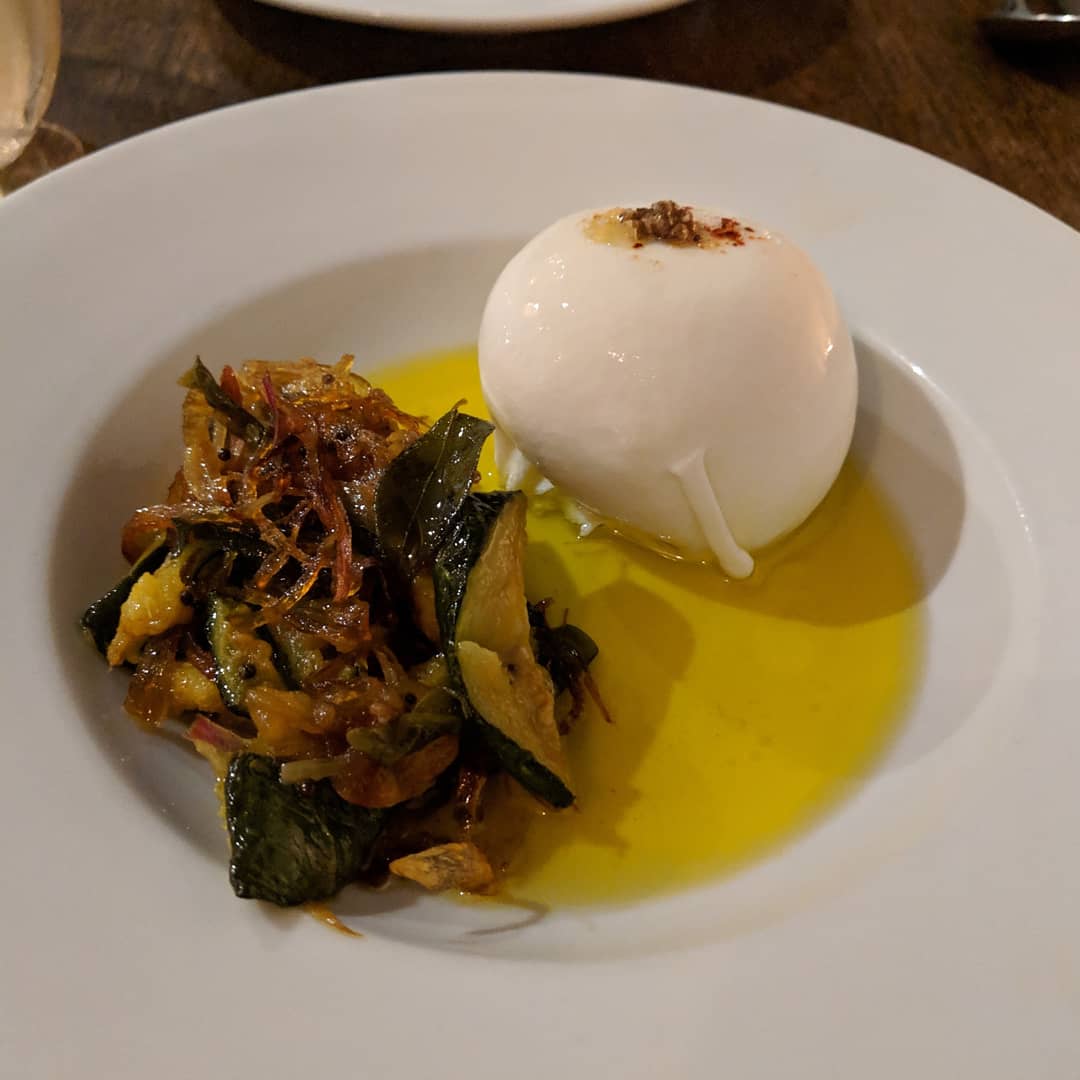
Burrata, slow cooked courgettes
It was difficult to pick a favourite from the mains. The green risotto still had incredible bite but there was no hint of chalkiness and the pine nuts sprinkled on top had been toasted deeply adding a great flavour. How did they manage to toast them that darkly without burning them?

The vada, burrata and lamb were all dishes I'd order again too. Already being full we shouldn't have ordered dessert but did the lure of sugar drew us in. They didn't feel up to the level of the main courses but it's a bit unfair to judge them when we were so full.

It took us a long time to get to Sparrow, but hopefully we'll organiser another babysitter and be back sooner next time.
Green risotto, pine nuts, perroche

Slow cooked lamb, polenta, carrots

Ginger loaf and butterscotch sauce

Mont Blanc

Sparrow
2 Rennell Street,
London
SE13 7HD

Sunday, 7 October 2018

Raleigh Strada eBike review *Updated*

I bought my eBike three weeks ago to use on my daily commute into the office. My previous bike was ten years old, and although the frame was probably the only original component still left on the bike, I'd been scratching the itch for something new for a couple of years.

A more immediate driver for buying the bike was my 10 month old daughter. She's a bundle of joy but has definitely meant I get a lot less sleep than I used to and cycling home after a day at work on little sleep was becoming increasingly difficult. Some days I was getting the train to work as I knew I wouldn't be able to manage the ride home.

eBikes are becoming increasingly common in bike shops in London, but most places only carry a very limited range. I knew that I wanted a crank drive, but was really pushing my limited budget to get one. In my budget were a very limited number of models from Cube and Raleigh. I ended up with the Raleigh Strada largely because the Cube sales rep didn't get back to my local bike shop. Sometimes it is best to leave things to fate...

So what is it like to ride?

Riding downhill: Assistance from the motor cuts out at 25kph / 15mph which is easily exceeded on even moderate inclines. Basically riding downhill is exactly the same as on any other bike. You might get a bit of extra momentum from the bike being heavier than a standard bike, but this isn't something I've tried to measure.

Starting and stopping: Pulling away is one of the two times when I really notice that I'm on an eBike. It takes very little effort to get going and you accelerate away from the lights up to 15 mph very quickly. Given that stopping and starting can be a real energy sapper this is where having some assistance makes a real difference.

Stopping on an eBike is no different to a regular bike.

Riding uphill: This is the second area where riding on an eBike makes a real difference. On my commute I only face a few undulations, but the four small climbs at the end of my ride home were a real struggle on days when I'd had insufficient sleep. The motor makes a noticeable difference and it almost feels like you are riding on the flat which is amazing.

Riding on the flat: Riding on the flat is the thing that has taken the most getting used to which is not something I was expecting. The motor assistance means that you accelerate up to 25 kph / 15 mph and it is actually quite hard to cycle slower than this.

Going quicker: The Strada is a very easy rolling bike so it is perfectly possible to cycle faster than 25 kph / 15 mph under your own power and I frequently do on my way to work. However, I'm conscious of the fact I'm shifting a heavy bike (due to the motor and battery) and it is harder work than it was on my old bike.

Cycling at 25 kph / 15 mph: I find myself cycling at this speed quite a lot due to the electric assistance getting you up to this speed without much effort. The power delivery is incredibly smooth, but I am conscious of the motor kicking in for a couple of pedal strokes, cutting out and then back in again. I'm guessing this must be a pretty common scenario and I'm hoping that it isn't bad for the motor. As I said the power delivery is very smooth and there is no jerkiness.

When you see people on eBikes zipping past you on the flat you realise how many must have had the limiters removed / don't comply to UK law.

Range anxiety / Battery life: Quite simply I don't have any range anxiety. I've been charging the battery once a fortnight after covering 80 - 90 miles (at around 15% battery left). Battery charging is quicker than I expected too, taking 2-3 hours.

Power Modes: The Shimano system has three power modes, Eco, Normal and High. I only really ride in Eco as it really provides a significant boost and on a mainly flat commute like mine that is all you need.

If I'm feeling really lazy on the final drag home I might turn the bike to Normal and then you barely do have to pedal.

Noise: Something I hadn't expected, but is pretty obvious if I'd thought about it. I'm not saying the motor is noisy, in fact it's pretty quiet, but you can't escape the fact it does make a noise. In traffic you won't hear it, but on a quiet country cycle path or country lane you are likely to hear it. More importantly so will the people you cycle past, and they'll know you are cheating.

Quirks: The only quirk I've noticed is that you can't turn the system on while pedalling, so you need to turn it on before you jump on the bike or while you are rolling, but not pedalling. I think this is because there is a torque meter in the motor and it needs to calibrate each time you start cycling.

Overall I'm really happy with the bike. It's fun to ride and on the sleep starved nights it still makes me want to cycle to work, which was the whole point of buying the bike. The only downside I can see is that more and more manufacturers are integrating the battery into the bottom tube so I think the bike is going to look pretty dated in a couple of years with the battery so visible on the frame. It might also make me fat as I'm exercising less than on my old bike.

A quick hat tip to my local bike shop Parts and Labour who gave me some good advice before the purchase, sourced the bike at a great price and have given me good service since then. I have no affiliation other than being a happy customer.

*Update*
I've had the bike for around 5 months now and use it most weekdays. Overall I'm still very happy with the bike and continue to enjoy riding it.

However, I thought I'd share a minor annoyance with the battery. In a nutshell the amount of battery remaining doesn't go down in a linear fashion. I've had a few instances when the amount of battery left suddenly drops by 20%, I've also seen some 10% and 15% drops. This seems to happen when I've got less than 40% of the battery left.

I still only need to charge the bike around once a fortnight so I don't think the battery is failing or the capacity has noticeably reduced. It seems to be more of a battery management issue which means I never quite trust how much battery is actually left. As my lights run off the main battery I really don't want to be caught with no power left and a ride home in the dark.

Saturday, 1 September 2018

Domestic energy monitoring: Is a home battery worth it?

Cross posting a Twitter series I've started onto the blog.

@richardelliot
I love the idea of a home battery to connect to our PV system because I'm a sucker for new technology, even if I know they won't be economic until about 2030. As a way of delaying the purchase by a minimum of 12 months I've decided to collect a year of data 1/

@richardelliot
The measurements are complicated by a) getting good data, b) because we already store some electricity in the form of hot water via our power diverter and c) because I don't know what I'm doing. C is without doubt the biggest problem. 2/

@richardelliot
I'm going to ignore peak loads, that can be my reason for putting off a purchase in year two 3/

@richardelliot
June 2018: Average import of 3.5 kWh per day, stored 4.9 kWh as hot water and exported / could have stored 6 kWh in a battery. Max import on any day 5.3 kWh. Conclusion: A battery could have made us off grid. 4/

@richardelliot
July 2018: Average import of 3.6 kWh per day, stored 4.6 kWh as hot water and exported / could have stored 5.8 kWh in a battery. Max import on any day 5.6 kWh. Conclusion: A battery could have made us off grid. 5/

@richardelliot
August 2018: Average import of 4.2 kWh per day, stored 4.1 kWh as hot water and exported / could have stored 2.9 kWh in a battery. Max import on any day 6.5 kWh. Conclusion: A battery could have met 70% of our needs. Could have been off grid if we stored less as hot water. 6/

@richardelliot
September 2018: Average import of 4.2 kWh per day, stored 3.9 kWh as hot water and exported / could have stored 2.3 kWh in a battery. Max import on any day 6.5 kWh. Conclusion: A battery could have met 50% of our needs. Could have been off grid if we stored less as hot water. 7/

@richardelliot
Classic sunny, but short, autumnal day. Completely mismatched generation and demand for a working family. Exported 4.4kWh and imported 5.5kWh (so far). 8/

@richardelliot
October 2018: Average import of 6.2 kWh per day, stored 2.3 kWh as hot water and exported / could have stored 1.0 kWh in a battery. Max import on any day 10.9 kWh. Conclusion: A battery could have met 20% of our needs or 50% if we didn't store any electricity as hot water. 9/

@richardelliot
Generation continued falling in October and our electricity consumption rose significantly making it a bad month for energy independence! We have a number of electric heating sources that we use as a little top up before the central heating comes on. 10/

@richardelliot
November 2018: Average import of 7.6 kWh per day, stored 0.9 kWh as hot water and exported / could have stored 0.3 kWh in a battery. Max import on any day 9.7 kWh. Conclusion: A battery could have met 4% of our needs or 20% if we didn't store any electricity as hot water. 11/

@richardelliot
The stats this month are looking pretty bad, but if we had some form of local / district storage we could still be energy independent for about another month based on all the excess generation over the summer.

@richardelliot
December 2018: Average import of 7.5 kWh per day, stored 0.1 kWh as hot water and exported / could have stored 0.4 kWh in a battery. Max import on any day 10.6 kWh. Conclusion: A battery could have met 5.6% of our needs or 6.5% if we didn't store any electricity as hot water. 13/

@richardelliot
The December stats look pretty bad again, but if we had enough storage we could still be energy independent based on our summer generation. This is the last month I'm likely to be able to say that though. 14/

@richardelliot
In 2018 we earned £453 from our solar panels in generation and export tariffs 15/

@richardelliot
January 2018: Average import of 8.3 kWh per day, stored 0.0 kWh as hot water and exported / could have stored 1.0 kWh in a battery. Max import on any day 11.4 kWh. Conclusion: A battery could have met 12.4% of our needs 16/

@richardelliot
February 2018: Average import of 6.8 kWh per day, stored 0.0 kWh as hot water and exported / could have stored 3.3 kWh in a battery. Max import on any day 10.3 kWh. Conclusion: A battery could have met 48% of our needs 17/

@richardelliot
We generated 15% more electricity than we used in April. First month of the year back in positive territory. 18/

Sunday, 11 March 2018

The Big Half: Build Up and Race Notes

Herbert and my Big Half Medal
Prior to competing in the Berlin marathon back in 2015, running had been a big part of my life for four / five years. I've been running reasonably regularly since then, but nowhere near the same level of intensity. At one time a 50 mile week would be easy and now it feels like something that is unachievable!

I was happy to reprioritise other things in my life (house building, work & family), but at the same time I used to get a bit upset and how far my times had tumbled. Last year when I saw the Big Half announced I decided that it was finally to set myself a goal and get a race in the diary.

Even with a goal in mind, I still let my training drift as the race was a long way off, until the start of this year when suddenly it wasn't any more! At the start of January I put together an eight week training plan together for myself and have actually enjoyed the structure. I could no longer skip a run because "I was feeling a bit tired" or "I didn't fancy running in the rain".

I knew I had to be realistic and that getting close to a PB wasn't going to be remotely possible as eight weeks wasn't long enough to build a base, some speed endurance and taper. Racing the Hagley Park Run while I was in NZ gave me a confidence booster that I should be able to achieve something in the 82 - 84 minute range.

I started race day nice and relaxed. Bumping into fellow club mate John on the start line we decided to run together as we were targeting for approximately the same time.

0 - 5km
We settled into a nice pace pretty quickly (which surprised me as I hadn't done any training at target pace), and despite quite a bit of weaving round slower runners settled into a rhythm. I could feel my breakfast sitting in my stomach. I'd eaten three hours before the race, but that obviously hadn't been enough time to digest it fully.

Around 4km I was beginning to feel that it was a bit quick and started thinking I was going to have to tell John I needed to back it off a bit as I didn't think I'd be able to make it to the end at the current pace. However, around the 5km mark I started to feel ok again.

6 - 10km
Somewhere around the 6km I started to pull away from John slightly and found myself with a group of runners I recognised from the Assembly League, including a very good female runner called Claire. I ran with them for a bit and then started to ease away from them. I knew I was probably going a bit quick, but I was feeling good at that stage so decided to stick with it.

During this phase of the race I also passed a couple of other Kent runners, Matt and Rowan, who would usually beat me. I probably should rain this in.

11 - 15km
I don't remember much about this phase of the race. Somewhere around the 13km marker Claire came onto my shoulder, but then dropped back again.

I was trying not to be too negative, but at this stage of the race I could tell my lack of speed endurance / general training was going to catch up with me and I'd struggle to maintain this pace to the end.

16km - Finish
As predicted I detonated in this phase of the race. I was trying to keep myself positive and tell myself that it was only a Parkrun distance to go (even though it was further) and also not to look at my watch. In the past, even though it has felt like I've slowed to a crawl, my watch has told me it isn't nearly that bad. If I didn't look I could tell myself I'd barely slowed!

I started to feel a blister on my right heel. Do I stop to adjust my sock? No.

At 18km I received a huge cheer from club mate Alison. It was brilliant, even if I didn't feel as good as I was told I looked. It was at this stage that I started going backwards in the race and I was definitely the one being overtaken. I could also hear lots of "go Claire!". I didn't look round, but I knew she must be close.

Keep going, it's not far.

In the final 200m John came onto my shoulder, he'd clearly run a lot more even race than I had and had now caught up with my. I put in a sprint finish and managed to beat John by around 5m.

I finished in 1:23:17. I was 396th out of 11,598.

The data from my watch is here.

The official results are here. With some fun visualisations of the data here.

Saturday, 10 March 2018

Super Thai food: Supawan, Kings Cross


I recently read Marina O’Loughlin's review of Supawan, and like many other people I suspect, decided I'd like to try their Thai food for myself. A catch up with my friend Ed last night provided the perfect opportunity.

Marina was universal in her delight at Supawan. We had two awesome dishes and two a bit more average, although the highs definitely outweighed the lows.

First, the highs. The neua yang (grilled beef) is described on the menu as coming with a grounded rice and mint dressing. What they didn't mention on the menu was the amazing sauce that had us both spooning it over our rice to make sure we ate every last drop.

The second excellent dish was the Thai squid (pictured). At first glance it looks like any other deep fried calamari, but the chili and tamarind coating took this squid to a whole different level. I could have very easily eaten another plateful.

The two dishes that slightly missed the mark were two staples that I love ordering on my visits to Thailand. The first was som dtum (papaya salad). In Thailand this salad is ferociously hot and it is a dish that just doesn't work without chili and our just didn't have enough. Phakbung fai deng (stir fried morning glory) universally comes in tasty garlicky sauce, but this one was just a little bland and without enough punch in the sauce.

The beef and the squid were definitely enough to make me want to go back. Hopefully I find some more highs from the menu. At £25 a head it was excellent value and our lovely server even tolerated my poor Thai.

Oh, and I'm pretty sure the bathroom tiles are the same ones as we have in our bathroom too.

Supawan
38 Caledonian Rd
Kings Cross
London
N1 9DT

Saturday, 3 March 2018

Summer in Scotland: Adfern and surrounding area

Neolithic burial mound in Kilmartin Glen
For the final few days of our time in Scotland last summer we stayed at a B&B in the small community of Ardfern with a rather eccentric host (who has since sold the B&B). Here are some of the highlights of our time exploring the local area.

One of the first and most memorable things we did was a guided walk of the neolithic (mainly burial) sites in Kilmartin Glen. The guided walk started and ended at the Kilmartin Museum and we spent a couple of hours being guided round the glen by some very friendly locals. The glen is packed with incredibly well preserved neolithic remains.

I can't remember many fact from the walk now, but I do remember enjoying it at the time. They take a limited number of people on the walks and regularly hit capacity so it is worth getting your name onto the sign up sheet early in the morning and then coming back for the walk in the afternoon.

Becks disappearing into a burial mound
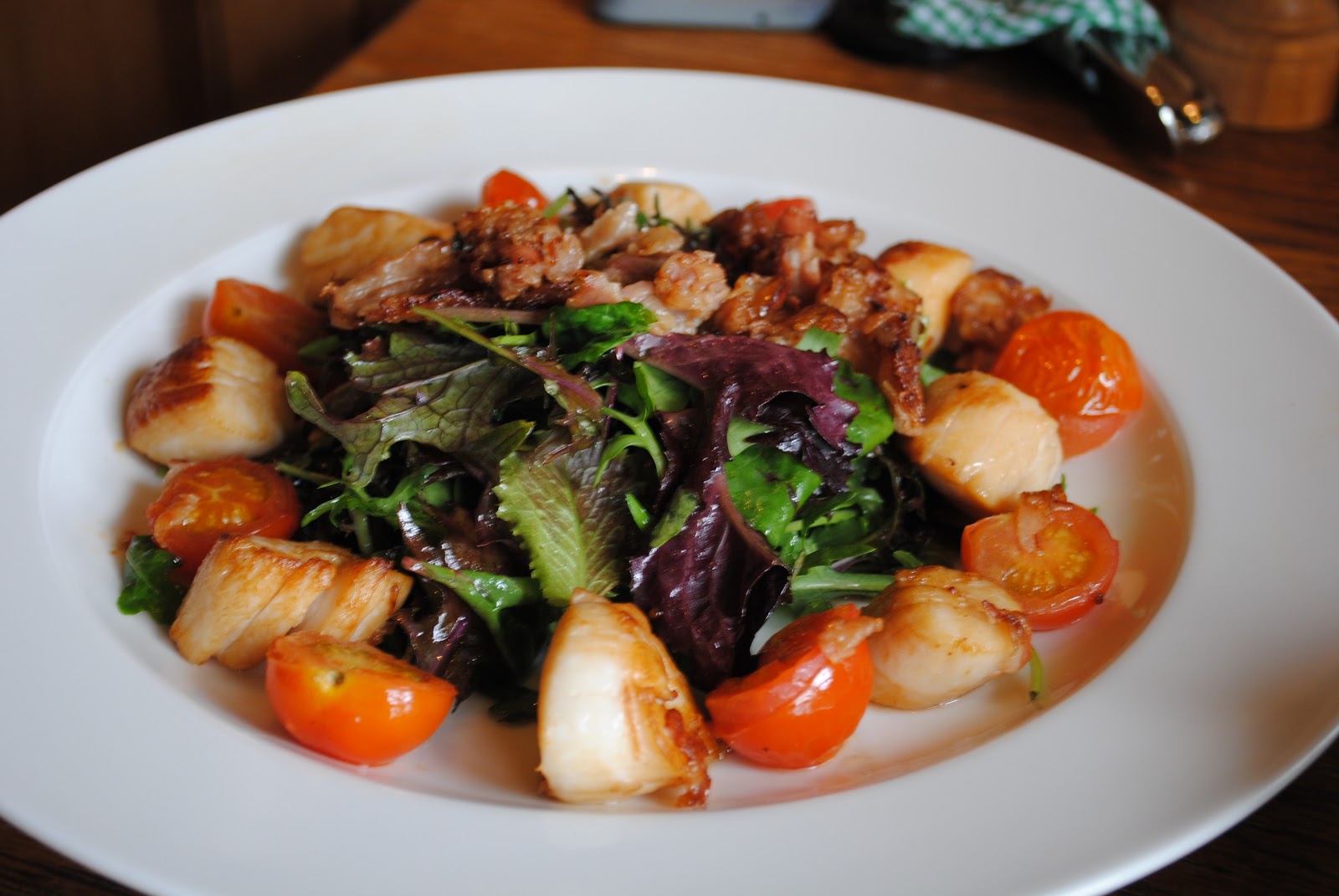
Not to far from Kilmartin is the small settlement of Crinan. We visited twice, once during the day to go for a walk along the canal and then we returned in the evening for dinner in the seafood bar at the Crinan hotel which is well known locally as one of the best spots in the area for seafood. Having ticked langoustine off my list in Islay, this time I ordered a plate of scallops which was another item on my holiday check list.
Scallops at the Crinan seafood bar

Knapdale Forest
Taking advantage of the long summer days up in Scotland we stopped for a walk in the Knapdale forest on the way home from Crinan. The forest is the site of trial to introduce beaver colonies back into the wild in Scotland. We didn't spot any of the beavers, but did see some of their dams and had a pleasant walk round the forest on some of the trials.
At Arduaine gardens
On another long day out and about we started of by looking round the Arduiane gardens (lovely, but we were a bit out of season) before heading up to Oban. Compared to the rest of our trip Oban was tourist central with lots of overseas visitors around. Oban is clearly a tourist hub and a gateway to some of the outer islands.
Lobster in Oban
We had lunch at Eeusk (lobster, the final tick on my seafood wish list)  on the waterfront and a quick look round the centre of town before jumping into the car again and heading to Easdale island, a delightful, if slightly odd experience. 

Wheelbarrows Easdale
The tiny island of Easdale can only be accessed by a small ferry which only takes foot passengers. When you arrive on the island, the first thing you see if an assortment of wheelbarrows that the locals use to transport their shopping from the ferry back to their houses.

The island is covered in abandoned slate mines and was clearly a hub in the activity in its day. The only thing to do on the island is to have a walk around some of the abandoned mines and through the small settlement near the ferry.
Abandoned slate mines on Easdale
The island was very idyllic but it must be a tough live living on the island, exposed to the weather and only able to access your home via a small very. I suspect everyone that lives there must do it because they love the island. 
Bridge over the Atlantic

Saturday, 20 January 2018

Summer in Scotland: The Isle of Jura

Becks looking towards Lagg
My favourite day of the holiday was the one we spent on Jura, which is just a short hop on the ferry from Islay. It would be fair to say that there isn't much to do on the island apart from drink in the scenery, but oh what scenery it is.

There is only one main road on the island and we spent the day driving as far north as we could (the top of the island is private land), before turning round and retracing our steps in time for a ferry back to Islay.
Inverlussa Bay
The furthest north we went was to the inlet of Inverlussa. In between the rain showers we managed to go for a walk on the beach and a visit to a converted horse box, which is now a make shift café. One of the locals puts a freshly baked cake into the horse box each morning along with a couple of Thermos flasks of hot water. You can make yourself a drink and enjoy a slice of cake and leave some money in the honesty box when you are done.
Tea on the beach
We were thinking about taking on part of Evan's walk, but the wind was howling a bit too much for us. Plus it looked quite a lot like rain....
Evans Walk
No visit to Jura would be complete without popping into the distillery. We'd missed the daily tour, but one of the people working in the shop kindly took us into the distillery to see the stills and also to the barrel room. Once back in the shop I asked if I could do a tasting and much to my surprise they don't do paid tastings but they were very happy to give me a free dram instead!
Jura distillery

Saturday, 13 January 2018

Summer in Scotland: The Isle of Islay

Portnahaven on Islay
Islay has to be the most famous whisky producing venue in the world. The more attentive readers among you will notice a complete absence of whisky in this post, but never fear I have a dedicated Islay whisky blog coming up!

On our first day on Islay we headed down the western side of the island. Our first stop was at Port Charlotte where we visited the Islay National History Centre and the Museum of Islay life, both of which were charmingly stuck in a bit of a time warp but interesting to look round none the less.
Machir Bay
After Port Charlotte we headed to Portnahaven (top photo) at the tip of the western peninsula which is a quaint, and exceedingly quiet, little fishing village. On the way home we stopped for a walk on the almost endless beach at Machir Bay.
Langoustine at The Lochside in Bowmore
Our best meal of the holiday was at The Lochside Hotel in Bowmore. From the outside it looks like a slightly rough pub, but looks (or my prejudice) is utterly deceptive as inside is a modern bar and a large dining room looking out to sea. I ordered an enormous place of sweet langoustine that I enjoyed devouring and Becks had some equally excellent scallops. We were lucky to get in without a booking, so make sure you reserve a table if you are in Bowmore.
Highland cow on The Oa
While on the island we also did a walk round The Oa peninsula which is a huge RSPB nature reserve. The reserve is home to the American Monument which commemorates two troop ships that were sunk in 1918 during WWI. Unsurprisingly we saw quite a few American tourists making a respectful visit to the memorial.

During our walk I took the above picture of a highland cow which made it to the final of the photography exhibition held by the Islay Book Festival!
American memorial on The Oa
Becks at the lighthouse near Port Ellen
In the afternoon of our walk round The Oa, we also walked around the headland from Port Ellen to beach known as the 'Singing Sands' (below). The sun came out while we were at the beach and it looked almost tropical, but looks can be deceptive as the water was absolutely freezing! I lasted a matter of seconds in the sea, but did manage to find a shallow rock pool which had been warmed by the sun and made for a much more pleasant paddle.
Singing sands
On the blog I generally follow the principle that if you can't say something nice, it's better not to say anything at all. However, I'm going to break my own rule to say that I was unimpressed by our stay at The Harbour Inn in Bowmore. The staff were lovely, and the breakfasts were very good, but the rooms were just not up to standard. The impractical layout and the fact they were a bit tatty round the edges were a minor annoyance, but worst by far was the fact the mattress was shockingly worn out and sagging, completely incompatible with a good nights sleep. If you are thinking of staying check they've replaced the mattresses.
Port Ellen beach

Sunday, 7 January 2018

Summer in Scotland: The Isle of Arran

Machrie Moor standing stones
Back in the summer we spent ten days travelling round Scotland, starting off with a couple of nights on the Isle of Arran.

On our only full day in Arran we did a lap of the island in our dinky little hire car. We started off by visiting the standing stones at Machrie Moor, a neolithic site with multiple sets of standing stones within a relatively small area. We had the area almost completely to ourselves and saw lots of pink foxgloves on the walk to and from the stones.
Pink foxgloves
Continuing round the island we saw a new distillery being built (which we learned the following day was owned by the Arran distillery) and then stopped for a walk along the beach in Whiting Bay. We parked opposite the Arran Art Gallery and decided to pop in before we continued our drive round the island. I didn't have much hope for the gallery, but it was actually really good with lots of pictures and prints that we wanted to buy. We ended up buying four pictures that the shipped back to London for us at reasonable rates. I'm pleased to say we still like the pictures several months on!
Arran distillery
On our final morning on Arran we took the tour at the Arran Distillery. Having tasted one of the first bottles that the distillery produced I have to say that I don't hold their whisky in particularly high regard. They seem to be doing really well so you probably should take my opinion with a pinch of salt! Their tour was very interesting and they gave me a dram to take away (which I still haven't tried).
Copper stills inside the distillery
The distillery make a big thing about being independent and making non-peated whiskies, so it gave me a wry smile to learn that the distillery we'd seen under construction was owned by them and was being set up specifically to make peated whisky.


Lochranza Castle
From our short time in Arran, I'd say the food was a bit mixed. We had a nice evening meal at The Stag's Pavillion, but the most pleasing surprise was discovering The Sandwich Station. They make really good sandwiches on locally baked sourdough bread and using interesting local ingredients. I think the sandwich bar would holds its own in any city in the UK and was not the dry white bread and soggy lettuce I was expecting!
Lochranza sandwich station
One of the strangest things about Arran, in a nice way, was the number of red swings that were dotted around the island in completely isolated locations. Why build a swing where there are no nearby houses to make use of them?
There were swings all over Arran
We left Arran on this small ferry heading towards the Isle of Islay.
Leaving Lochranza by ferry

Saturday, 21 October 2017

Antwerp weekender

Crane on the banks of the Scheldt
Back in July we hopped on the Eurostar and headed for Antwerp, a city that is pretty perfect as a weekend break destination. Historic architecture, interesting museums and markets, high walkable, friendly, vibrant regeneration and some decent food were all in evidence.

So what did we get up to?
St Anna's foot tunnel
We started our trip with a wander by the riverside heading through the St Anna tunnel across to the west side of the Scheldt river. I was expecting the foot tunnel to be a bit like the Greenwich foot tunnel, but it is a much, much bigger brother.

We got a free pedestrian and cycle ferry back to the eastern side of the river after a short wander.
A mix of Antwerp building styles
On the second day in the city we walked from our hotel to the excellent Plantin-Moretus Museum. The Plantin and Moretus families were some of the most influential printers in Europe, who had one of (the?) first automated printing pressed in the world four hundred year ago.

The museum is a clever presentation of how their house and offices looked at the time and was very enjoying to look around. All of the daughters in the family were taught to read, uncommon at the time, so that they could help proof read in the business!
Plantin-Moretus Museum
From the old to the new, in the afternoon we headed to the ultra modern Museum aan de Stroom, slightly to the north of the city in an area of the docks which is now being regenerated. There is a gallery space on nearly every floor and we bought a ticket which allowed us to wind our way up through the building looking at each exhibition. I have to say that some were more interesting than others.

Museum aan de Stroom 
On our third day we started by checking out one of the large weekend markets that was right next to our hotel before strolling Stadspark and the diamond district (very much closed on a Saturday) to the main train station. It truly is a very impressive train shed.

We also spent the day doing quite a lot of meandering round the historic parts of the city, popping into chocolate shops and visited the Sint-Pauluskerk church.
Antwerp City Hall

Having had enough of the old, we walked back up to the docklands area around the Museum aan de Stroom to see some of the new. The regeneration is slowly creeping northwards and we found ourselves at the De Panick bar. Located in an old warehouse it was definitely a hipster bar and the type of place that will probably be flats in ten years time as the, but we enjoyed it!

De Paniek bar
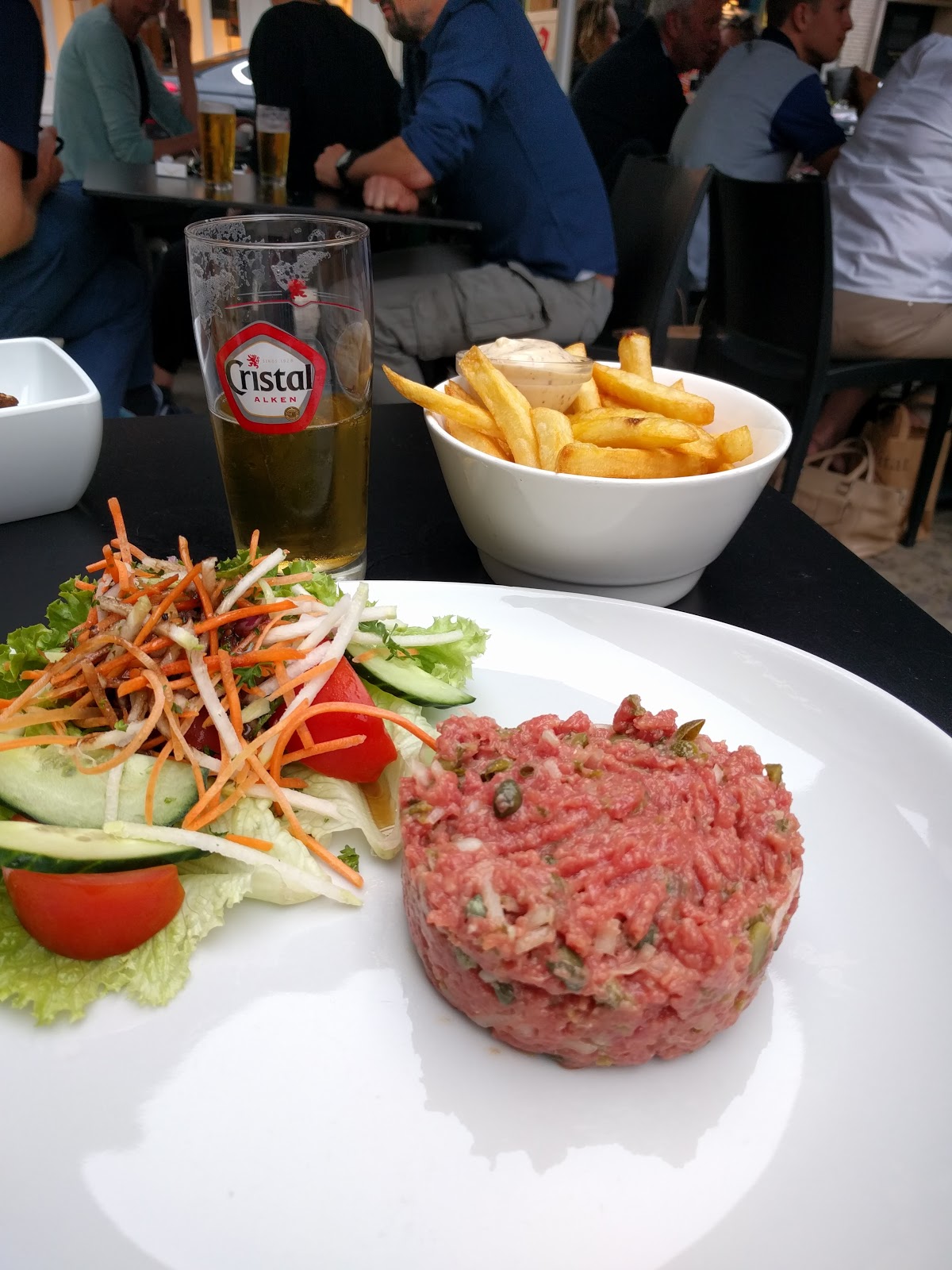
For all the good things about Antwerp, one thing we didn't really work out was the dining scene. The Europeans all eat really late, right? Lots of places seemed to close early and the ones that were open seemed to stop serving relatively early. We never did figure out what the locals did, but we did stumble into De Arme Duivel / The Poor Devil at just the right time one evening to have a lovely café meal.
Steak tartare at The Poor Devil
On our last morning we visited the Rubens House Museum before making a last minute decision to try and fit in the Red Star Line Museum before our train. The Red Star Line museum was a fascinating account of all of the emigrants that passed through Antwerp on their way to the New World. The guidebook was correct that there isn't a lot of English in the museum, but it was still very much worth while a hurried visit.


Buying a Eurostar ticket to Brussels includes a free transfer to Antwerp, but you did have to change trains.

We stayed at the Theatre Hotel which we thought was a pretty good choice as it had a central location, large but dated rooms and a big continental buffet selection.